Physical Address
304 North Cardinal St.
Dorchester Center, MA 02124
Physical Address
304 North Cardinal St.
Dorchester Center, MA 02124
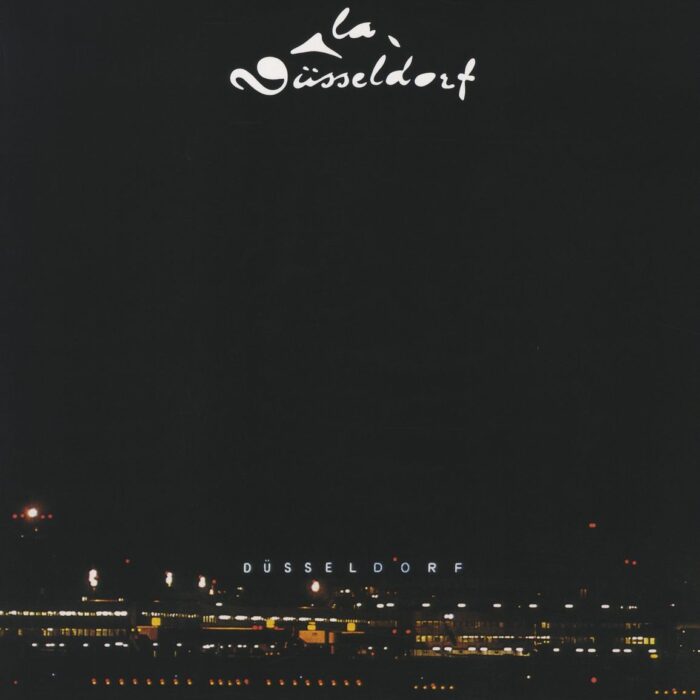

Samuel Cox celebrates the jubilant sound of the unwritten Krautrock manifesto in its final chapter
England’s second-choice goalkeeper Peter Bonetti is left grabbing at thin air as Gerd Müller sticks his right foot out to meet Jürgen Grabowski’s header during extra time in the 1970 Mexico World Cup quarter-final between England and West Germany, Alf Ramsey’s side having already squandered a 2-0 lead. This goal marked the beginning of a period of Teutonic dominance over European football that England would be unable to match. In the face of this sporting inadequacy, the English could console themselves with the fact that in the music world, at least, they still reigned supreme; Led Zeppelin’s ‘Whole Lotta Love’ had spent seven weeks at
number one in Germany only two months earlier, and the year would end with Black Sabbath’s ‘Paranoid’ in the top spot. As far as some Little Englanders were concerned, Germany’s musical output did not extend much further than the Horst-Wessel-Lied. Unlike their sporting successes, the great musical rumblings in Germany during this period had gone largely unnoticed.
Despite getting knocked out in the following round, two years later Müller and his teammates would win their first European Championship; another two years after that, their second World Cup. It’s hard to imagine many of the long-haired luminaries of Germany’s avant-garde music scene at the time paying much attention to their country’s footballing exploits, but one who must surely have dreamed of being to music what Müller was to football – a beloved national hero – was Klaus Dinger. “Klaus was animated and pervaded by his wish for personal greatness,” was how his Neu! bandmate Michael Rother put it in an interview with Christoph Dallach. “I’m not entirely free of vanity myself, but I was still more interested in the music, I think. Klaus wanted to be loved.” Nor was football’s frenetic pace and rhythmic movement far from Rother and Dinger’s musical philosophy. “I remember that Klaus and I never really talked a lot about theories, we just both really enjoyed playing soccer,” Rother told this very publication in 2010. “We all loved to run fast and fast movement, forward movement, rushing forwards. That was something that we all had in common and the joy of fast movement is part of what we were trying to express in Neu!”
The post “Düsseldorf. Düsseldorf. Düsseldorf.” La Düsseldorf’s La Düsseldorf at 50 appeared first on The Quietus.