Physical Address
304 North Cardinal St.
Dorchester Center, MA 02124
Physical Address
304 North Cardinal St.
Dorchester Center, MA 02124
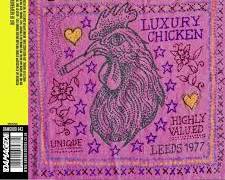
Discover the legacy of Fast Product, the pioneering Edinburgh label behind the "Mutant Pop" ethos, the iconic Earcom series, and the economics behind their post-punk vinyl.
“When we started out, it really felt like anything could happen. We were fearless… We thought we were going to change the world”.
– Bob Last
If you want to understand the true genesis of the UK post-punk movement, you have to look past the heavily mythologized boardrooms of Factory Records in Manchester and Rough Trade in London. You have to look slightly further north to an Edinburgh tenement flat in December 1977. Here, Bob Last and Hilary Morrison launched Fast Product – a record label that operated more like a subversive art project and a socialist political statement than a traditional business.
Operating under the brilliant, self-coined slogans of “Mutant Pop” and “Difficult Fun,” Fast Product was explicitly designed to disrupt the music industry from the inside. Last and Morrison wanted to challenge pop music conventions while actively hijacking the mainstream charts. This ethos was perfectly encapsulated by Morrison’s stark, iconic visual identity for the label. Fast Product sleeves rarely featured standard band photos; instead, they utilized austere graphics and ironic nods to mass consumerism, treating the music and the artists as interchangeable commodities in a larger, manufactured “product.” In doing so, Fast essentially kickstarted the Northern post-punk movement, launching the debut physical releases for legendary acts like The Mekons, Gang of Four, and The Human League.
While Fast Product is celebrated for launching those major careers, their Earcom (short for “Ear Comics”) series serves as a vital, unfiltered time capsule of the late-70s underground. Conceived as compilation EPs, the Earcom releases were a rapid-fire way for Bob Last to showcase multiple bands that he admired but couldn’t justify dedicating a full, standalone 7-inch release to.
These EPs perfectly encapsulated the “Mutant Pop” ideal: a diverse, challenging, and fast-moving presentation of bands that were tearing up the rulebook of 1977 punk and replacing it with something altogether more angular and avant-garde.
(Note for the Joy Division obsessives: The tracks on Earcom 2 were produced by the legendary Martin Hannett during the exact same April 1979 Strawberry Studios sessions that birthed Unknown Pleasures. However, because this was a Fast Product release, Hannett did not have his usual, notorious oversight over the test pressings. Once the master tape went to Edinburgh, Bob Last controlled the final vinyl product.)
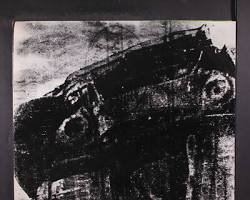
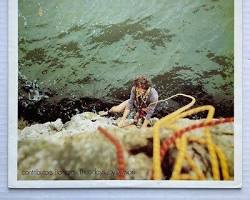
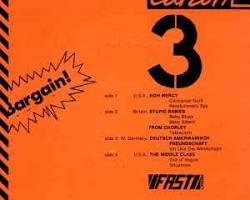
If you spend any time crate-digging or scrolling through Discogs, you might notice something surprising: for a label so historically significant, a lot of Fast Product 7-inches are startlingly affordable. This isn’t a market anomaly; it’s a direct reflection of how Bob Last ran the business.
Unlike many DIY punk labels of the era that treated records as precious, limited-edition artifacts – pressing 500 copies and instantly folding – Last was aggressively anti-scarcity. When a Fast single landed on John Peel’s turntable and started generating national demand, Last immediately ordered represses. Utilizing reliable contract plants like CBS Aston Clinton and Lyntone Recordings, Fast churned out enough copies to ensure anyone who wanted the “product” could easily buy it.
Furthermore, in a move that brilliantly subverted indie-purist expectations, Fast Product struck a licensing deal with EMI in 1979. They compiled their defining early singles into a widely distributed, major-label album called Fast Product – The First Year Plan. By making these tracks universally accessible on a mass-produced LP, the label effectively saturated the market, which permanently dampened the secondary demand for the original 7-inch pressings.
There is, however, one glaring exception to Fast Product’s general affordability, and its catalog number is FAST 9B: Earcom 2.
While the other Earcom EPs feature bands that largely remain fascinating but obscure footnotes (which keeps their resale value relatively low), Earcom 2 happens to feature Joy Division. Because the band possesses one of the most obsessive and well-funded collector bases in music history, the normal rules of Fast Product economics do not apply. Buyers aren’t just picking up an eclectic Edinburgh compilation; they are buying a crucial, physical piece of the Unknown Pleasures era. As a result, original pressings of Earcom 2 command drastically higher prices than almost anything else in the Fast discography, completely warping the label’s usual pricing trends.
Ultimately, Fast Product is the vital, often-underappreciated bridge between the chaotic explosion of 1977 punk and the polished, synthesizer-driven independent boom of the 1980s. Bob Last and Hilary Morrison didn’t just release great records; they dismantled the mythology of the rock star, repackaged it in stark, ironic sleeves, and sold it back to the masses on their own terms. Their catalog isn’t just a collection of songs – it’s a masterclass in “Difficult Fun.”
Footnote:
Both Bob Last and Hilary Morrison went on to have incredibly interesting and varied careers after the Fast Product era, though they took very different paths.
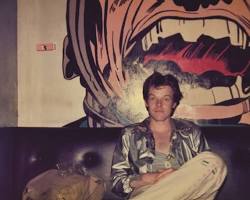
Aural & Music Management: After wrapping up Fast Product, Last launched a successor label called Pop:Aural, which released crucial Scottish indie acts like the Fire Engines. He also shifted heavily into management, famously steering The Human League to global pop stardom (navigating their split and the massive success of the album Dare) and managing their spin-off group, Heaven 17.
Film & Television: Last eventually transitioned into the film industry, working as a music supervisor and film producer. His crowning achievement in this arena is co-producing Sylvain Chomet’s stunning 2010 animated film The Illusionist—which was fittingly set in Edinburgh and earned an Academy Award nomination.
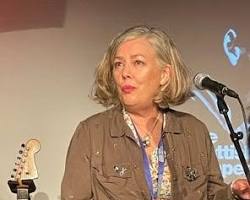
Vocals & The Post-Punk Scene: Morrison stayed active in the Edinburgh music scene for several years. She provided vocals for the band The Flowers (who had releases on both Fast and Pop:Aural) and later formed a group called Heartbeats alongside Davy Henderson of the Fire Engines.
Theatre & Community Education: She eventually transitioned out of the music industry altogether to work in theatre. Later in her career, she became a community educator, dedicating her time to working with various charities.