Physical Address
304 North Cardinal St.
Dorchester Center, MA 02124
Physical Address
304 North Cardinal St.
Dorchester Center, MA 02124

Article by JR Moores (Quietus)
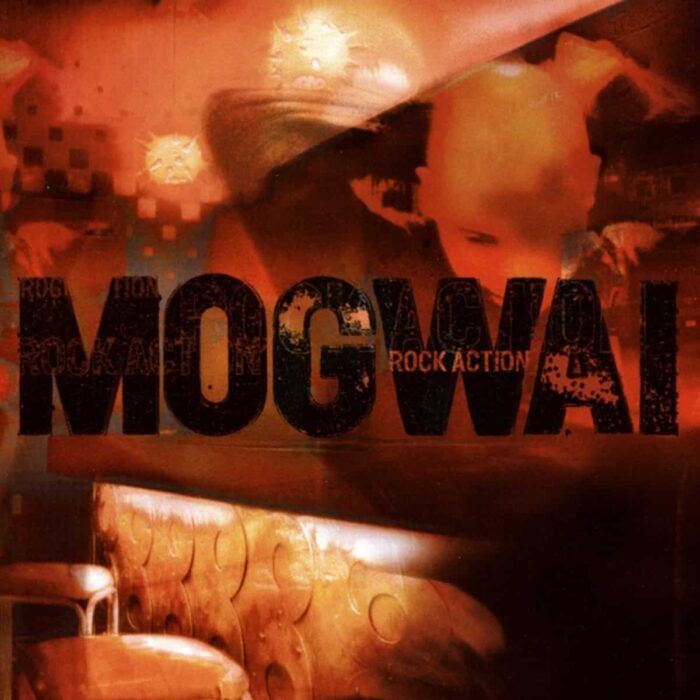
Rock Action felt like an anticlimax. How intentional was this? There were those at the Southpaw / PIAS label who had urged Mogwai to plump for an alternative title for their third album, presumably urging something more representative of the music within. The Scots dug in their heels.
‘Rock Action’ was a sleazy Iggy Pop track which only existed as a bootlegged live recording from 1977, named for Scott Asheton, the Stooges drummer and then, in 1996, it also became the name of Mogwai’s DIY label. However, slightly confusingly, this wasn’t the imprint that released Rock Action – the album, in 2001. This state of affairs invited criticism. Joe Gross writing for Blender magazine scolded the record for containing “neither rock nor action”.
Mogwai were, and still are, a mainly instrumental art rock project known for hating Blur, wishing violent death on Robbie Williams (among others), being Scottish, having American underground influences rather than twee British ones, and deploying deafening crescendos. Not always with the crescendos. Just often. It works.
“All the bands we rip off never made a third album,” remarked guitarist and occasional semi-reluctant singer Stuart Braithwaite in an interview with Spin. Who did he have in mind? Likely The God Machine and Slint. Joy Division, maybe. See also Codeine and My Bloody Valentine who, back then, were years away from making third albums which for a long time no one expected to ever arrive. Braithwaite was also talking poppycock, of course. Other influences included Sonic Youth, whose studio output had reached its double digits by then, and the mighty Bardo Pond. (The latter’s scorching fifth record, Dilate, came out the same week as Rock Action.) CAN, The Cure and countless others could be added to the list.
Rock Action was produced by Dave Fridmann. He was best known for helping to guide two long-running bands from noisy weirdness into territory more refined and consolingly twinkly: The Flaming Lips and Mercury Rev. The result was not Mogwai’s answer to Deserter’s Songs or The Soft Bulletin. It was less elegant, and less epic, than those two widely celebrated alt-rock takes on Pet Sounds, even if Rock Action did find Mogwai expanding their palette.
The recording had a bigger budget than Mogwai had ever enjoyed before. One mooted title had been The Most Expensive Post-Rock Album In The World…. Ever! They moved away from the casual, rough and earthy feel of Young Team (1997) and Come On Die Young (1999; also recorded with Fridmann). They went to town with new instruments. Banjos. Violins. Trumpets. Trombones. There were guest vocalists, too. David Pajo. Gary Lightbody. Gruff Rhys. Those at the label were delighted to learn the Super Furry Animals frontman would be singing lead on ‘Dial: Revenge’ and subsequently gutted to hear all his words were in Welsh. Dduw mawr! Other names who were rumoured or forecast to appear, yet didn’t in the end, were Chan Marshall (Cat Power), Chino Moreno (Deftones) and Mark Arm (Mudhoney). This enhanced the sense of unfulfilled promises. At least the lighter rollcall of collaborators meant Mogwai weren’t turning into Gorillaz.
“Compared to the glacial beauty of Sigur Rós or the neo-classical aspirations of Godspeed You! Black Emperor, Mogwai’s navel-gazing indulgences just don’t resonate,” wrote Joshua Klein of AV Club. Again, that might have been part of the point. Mogwai had found themselves lumped in with acts such as those mentioned by Klein and they didn’t necessarily feel much affinity. One of the reasons Rock Action is so short, at under 40 minutes, is that Mogwai left off any songs they’d written that they felt could be compared to other bands who sounded like Mogwai. More insulting, potentially, was a summary in The Guardian’s Friday Review supplement. Despite claiming that Mogwai seemed incapable of writing a “rip-roaring chorus”, John Aizlewood awarded Rock Action a very respectable four stars out of five. However, he did sign off with a compliment that could be interpreted as backhanded, particularly by Mogwai themselves, given their commendable tastes in music: “This year’s dinner-party soundtrack? Don’t bet your Dido disc against it.” That’s what’s known in the biz as a below-the-belt comparison.
Yes, it hardly rocks. No, you wouldn’t call it packed with action. The album is serene, shiny and so fleeting it seems a little incomplete. ‘O I Sleep’ lasts less than a minute. ‘Robot Chant’ had once been known as ‘Stuarto Pond’, a reference to Bardo Pond whose heavy moments of psychedelic discordance it emulates, alas for only 64 seconds. Unlike its influencers’ lengthy jams, ‘Robot Chant’ doesn’t have enough time or space to engulf the listener, to mesmerise them, to breathe and bewitch. In some ways, neither does the whole album.
Mogwai had been one of those groups who’d stretched quiet-loud dynamics to its logical conclusions on tracks including Young Team’s ‘Like Herod’ and ‘Mogwai Fear Satan’, again on Come On Die Young’s ‘Ex-Cowboy’ and ‘Christmas Steps’. These had their own wipe out sections, in some ways comparable to My Bloody Valentine’s ‘You Made Me Realise’, extended in live renditions to deafening effect.
The closest Rock Action gets to that formula is on ‘You Don’t Know Jesus’. Compared to those past examples, though, it is a paler and politer incarnation. Despite some swirling, jet-engine-adjacent pedal effects during its third minute, Mogwai were still holding off to avoid recreating their natural and earlier inclinations.
The album’s quieter moments may have underwhelmed on release. On repeat listens they are revealed to be the more compelling pieces. Although it might not resolve the suspense to obviously satisfying impact because it starts to peter out at the point where it might otherwise have exploded, the slow building introductory track, ‘Sine Wave’, is a glistening snippet of melancholic indietronica. Later, Gruff Rhys sings softly over rustling brushstrokes for ‘Dial: Revenge’. With its skeletal delicacy, ‘Secret Pint’ resembles a whispered Christmas carol. In contrast, the number that’s jauntiest, if that’s the right word, is ‘2 Rights Make 1 Wrong’. This is due to its comfortingly cheerful guitar motif, crisp drumbeats, vocoder voices, banjo plucks and brass accompaniment.
Rock Action’s reception was not helped by its release date. While it came out in April, 2001, the album seemed to make greater sense later that year, when the nights drew in. The anticlimactic nature of its material came as a surprise. It took time to enchant those who, at first, considered it unexciting. By the time the days were getting darker there was more of a consensus among fans that this was an album that did deserve frequent spins, as well as deeper consideration. Rock Action is not a BST record. It’s for the chilliest of the GMT months. Not all Mogwai material is Autumnal. Not ‘The Sun Smells Too Loud’! Not ‘Ceiling Granny’, for pity’s sake. Much of it is. They’re from Scotland, where many months are as cold and wet as a neglected bathmat.
Much of Rock Action conjures images of golden soggy leaves. Scarves. Fireplaces. Warming broths. Even the upbeat ‘2 Rights Make 1 Wrong’ has its Wellington boots placed in the puddles of the fall. Parts of that song recall Múm, who are from Iceland, where daylight is scanter than Glasgow’s.
In terms of its delayed embracement, the album also features the orchestrated slowcore ballad ‘Take Me Somewhere Nice’. Online, this would become Mogwai’s most popular tune in the world… ever. This was thanks to an unofficial YouTube upload of the music, with an accompanying image cribbed from the artist / video game designer Ken Wong of a girl with a goldfish bowl on her head, the animals still present. The video has since been removed (or set to private). For years it attracted thousands of comments, many of which were less to do with Mogwai than the difficult times users were going through, or had experienced in the past. Loss. Grief. Illness. Depression. Mistakes. Remorse. Shame. (Fewer commenters shared occasional joyful anecdotes, as well.) This dialogue baffled Mogwai as much as anyone. The phenomena shows how, in the internet age, there are pieces of music that get absorbed into some kind of digital folk consciousness, completely transcending the intentions of their composers.
The post Secret Punt: Mogwai’s Rock Action Revisited 25 Years on appeared first on The Quietus.