Physical Address
304 North Cardinal St.
Dorchester Center, MA 02124
Physical Address
304 North Cardinal St.
Dorchester Center, MA 02124
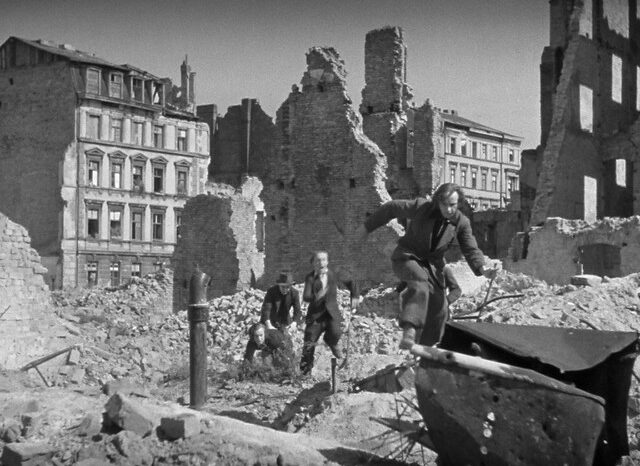
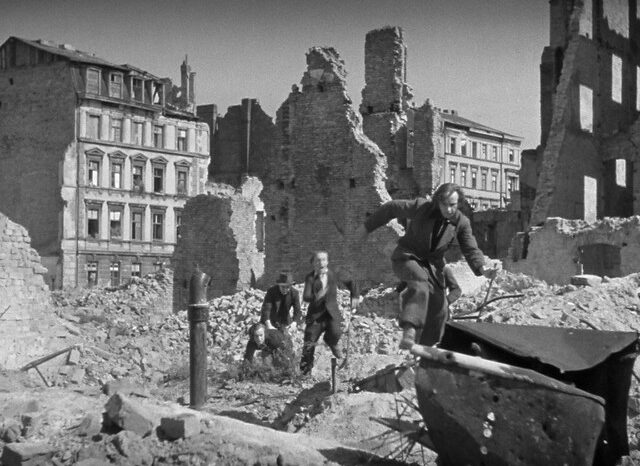
A new boxset from Eureka Entertainment collects five films from the DEFA archives, taking in film noir, Expressionism, melodrama – and denazification
At least twice, Germany has had among the most influential and important mainstream film industries in the world. First, famously, between 1919 and 1933, German directors, in what was called, not always accurately, ‘German Expressionism’, created the modern horror film with F.W Murnau’s Nosferatu and Robert Weine’s Cabinet of Dr Caligari, the modern science fiction film with Fritz Lang’s Metropolis, the morally ambiguous thriller with M, the film-essay with Walther Ruttman’s Berlin – Symphony of the Great City, and invented the indie film on the side, with Slatan Dudow and Bertolt Brecht’s explicitly Communist Kuhle Wampe or Robert Siodmak, Edgar G Ulmer and Billy Wilder’s impromptu People on Sunday. G.W Pabst’s Pandora’s Box and Diary of a Lost Girl invented (female) Goths. The German film diaspora created by Nazism would revolutionise American cinema in the 40s, particularly in the Film Noir, a largely German émigré invention. Decades later, the ‘New German Cinema’ of Werner Herzog, Rainer Werner Fassbinder and Wim Wenders, among others, took Hollywood genre cliches and bent and reshaped them into something fresh, experimental and politically radical, while the likes of Harun Farocki, Ulrike Ottinger and Alexander Kluge made formally extreme, theoretically dense, often extraordinary work on the fringes of the film industry. But could you name a German film made between the Nazi seizure of power in 1933 and 1966, the year of the first major feature of the New German Cinema, (Alexander Kluge’s Yesterday Girl)?
You might mention two Nazi films – Leni Riefenstahl’s Triumph of the Will, a tedious slog overrated by people who haven’t seen it, and her more impressive Olympia – or maybe the very late work of a rare returnee, Fritz Lang, like The Thousand Eyes of Dr Mabuse. But mostly, the German cinema of the later 30s, the 40s, the 50s and most of the 60s is a black hole to non-Germans. Within that, however, there are a few well-kept secrets.
Post-war Germany had, of course, two competing national cinemas, one in the West and one in the East. The one which lost out in the historical contest is that of East Germany, which reshaped the pre-war conglomerate UFA into the state-owned DEFA, which is today a minor cult among Germanophone film enthusiasts. There are several ways of telling its history – Eureka recently released an (already sold out) limited edition box set on their lavish science fiction films. But its obscurity has an easy explanation. East German cinema’s ‘golden age’ in terms of quality came in a new wave of films in the mid-1960s that were loose, ironic, sexy and often bleak, like Frank Beyer’s Trace of Stones, Kurt Maetzig’s The Rabbit is Me, or Jürgen Böttcher’s Born in ‘45; all of which were banned, sometimes before completion, meaning that a new wave – which might have ranked with that in Poland or Czechoslovakia – was crushed with staggering speed.
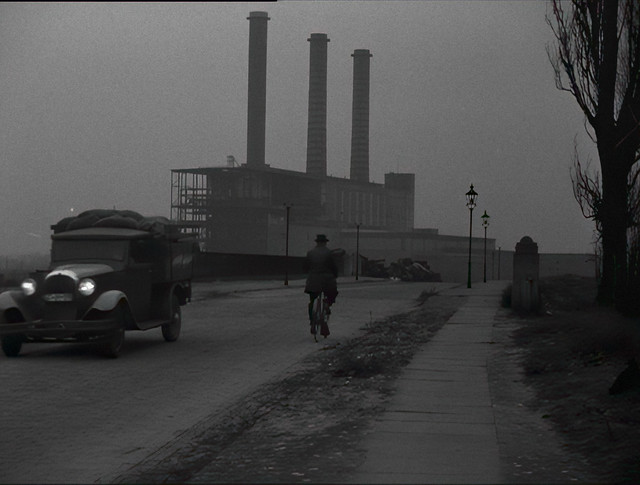
The easy explanation for why thirty years of German cinema presented such a miserable record, aside from East German censorship and West German conformism, is that what had happened to it as a society was so unspeakable that it was so much easier to retreat into escapism and propaganda than to reckon with the scale of the guilt. But post-war German cinema actually begins with an attempt to confront German society with its crimes: DEFA’s ‘rubble films’ sequence, which is the subject of the new Eureka boxset Wrack and Ruin, presenting five East German films from the first three years after the defeat of German fascism. ‘Rubble films’ were sponsored by the Soviet occupiers of Eastern Germany and East Berlin as part of the project of de-Nazification, with the theory being that mass market film was uniquely suited to forcing ordinary Germans to understand and come to terms with what they had done. It was a brief moment, necessarily compromised – most of the directors and stars had worked throughout the Nazi period, with few, if any, returned emigres working in ‘rubble films’ – but the films are fascinating as attempts to make antifascist commercial blockbusters, in a devastated society that would have preferred to think about almost anything else.
The post Murderers Among Us: Owen Hatherley Picks Over the ‘Rubble Films’ of Post-War East Germany appeared first on The Quietus.